
Germany is one of Amazon’s most important European marketplaces, and one of the most demanding places to get product preparation right. Sellers who treat German prep like any other warehouse step tend to learn the hard way: a listing gets suspended, a shipment stalls at customs, or a packaging fine lands months after the first sale.
Amazon prep in Germany is not just poly bags and FNSKU labels. It sits where physical preparation meets a dense regulatory layer, backed by a particularly visible and structured enforcement system that includes public registers and marketplace checks. Here is what makes it different, and how to prepare so your inventory reaches Amazon’s German fulfillment centers clean, compliant, and on time.
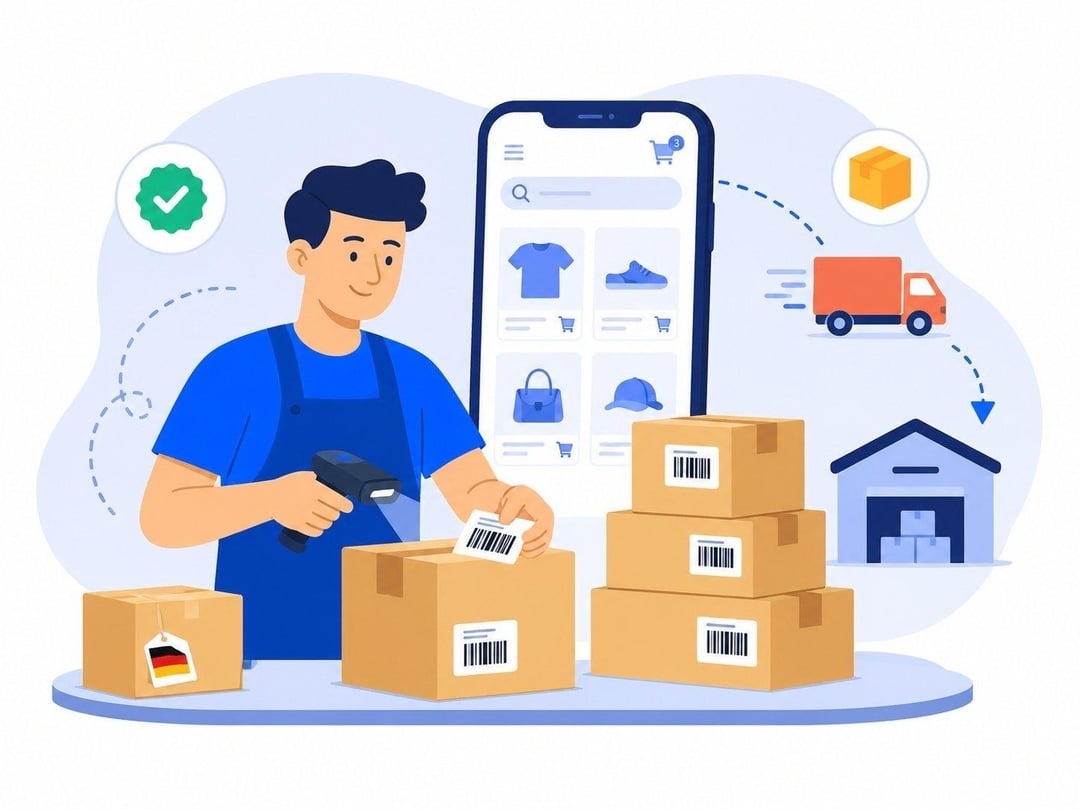
Why Germany raises the bar
Most Amazon marketplaces share the same FBA prep basics: inspection, labeling, packaging, and inbound forwarding. Germany stacks several country-specific obligations on top, and Amazon now polices many of them directly inside Seller Central.
Two forces drive this. First, German environmental law treats almost every online seller as a “producer” responsible for the waste their products and packaging create. Second, marketplaces are legally required to verify that sellers meet those obligations, so non-compliance shows up as a blocked listing rather than a quiet warning letter. The practical effect is that prep and compliance become a single workflow.
The packaging rule that blocks sellers: VerpackG and LUCID
The German Packaging Act (VerpackG) has been in force since January 1, 2019. Under it, mail order companies and online retailers that ship goods to Germany count as “producers”, including foreign sellers with no German entity and sellers using FBA.
Compliance comes down to three steps:
- Register with LUCID. Every seller must enroll in the LUCID packaging register, run by the Central Agency Packaging Register (ZSVR), and obtain a registration number. Registration is free.
- Join a dual system. Sellers contract with a licensed recycling scheme, such as Der Grüne Punkt or Interzero, and pay fees based on the type and volume of packaging they place on the market.
- Report packaging volumes. The quantities reported to LUCID and to the dual system must match. The ZSVR reconciles the two automatically, and discrepancies can create reconciliation issues or compliance questions.
Since July 2022, Amazon and other marketplaces must check a seller’s LUCID registration. Miss it, and your listings get blocked in Germany.
Any breach of packaging-law obligations triggers a distribution ban, and failing to join a dual system can bring fines of up to €200,000. The takeaway is simple: the LUCID number has to exist before the first unit ships, not after.
Beyond packaging: EPR for electronics and batteries
Packaging is the most common trap, but it is only one branch of Germany’s extended producer responsibility (EPR) system. Two more apply depending on what you sell:
- Electronics (WEEE). Electrical and electronic equipment falls under the German ElektroG. Sellers register with the EAR Foundation, receive a WEEE number, and file regular usage declarations.
- Batteries. Products that contain or ship with batteries need separate battery registration. A device with a built-in battery requires both the WEEE registration and the battery registration before it can go on sale.
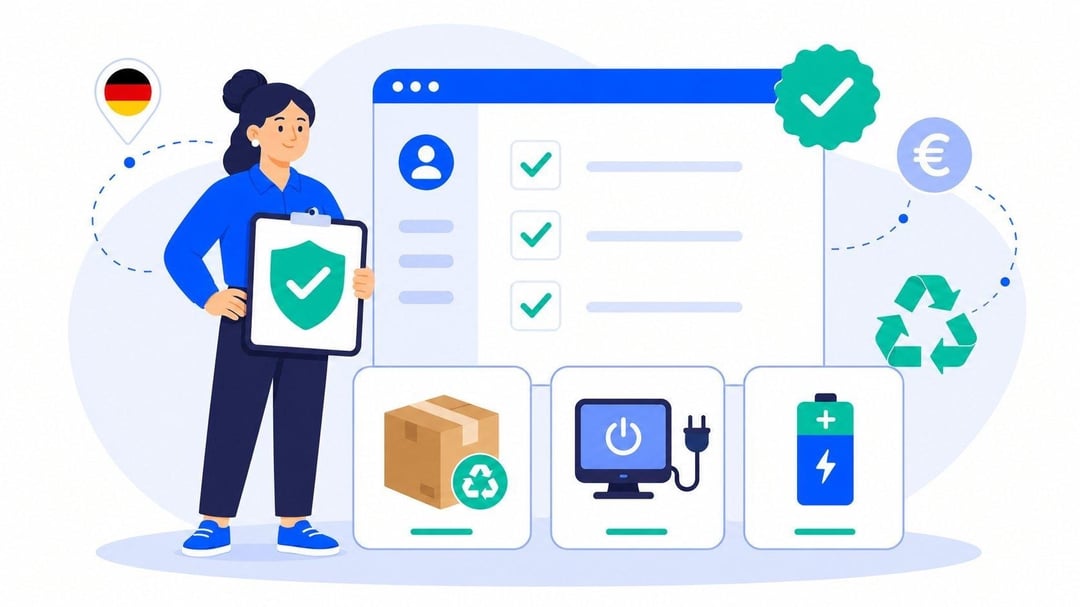
Germany’s three EPR streams every Amazon seller must check — packaging, electronics, and batteries.
Amazon began collecting EPR registration numbers in Seller Central from late 2021. In Germany, non-compliant listings became subject to suspension for packaging from July 1, 2022, and for electrical and electronic equipment from January 1, 2023. Without the right registration numbers on file, the platform suspends the affected ASINs.
Product safety and tax: GPSR, VAT, and EORI
A few more requirements round out the picture, and each one affects whether your German operation runs smoothly:
- GPSR. Under the General Product Safety Regulation (Regulation (EU) 2023/988), which applies from December 13, 2024, most consumer products within the GPSR scope need an EU-based responsible economic operator, and online offers must include the required product safety and contact information. Non-EU sellers usually appoint a Responsible Person to hold technical documentation and answer to market surveillance authorities.
- VAT. Storing inventory in Germany usually creates local VAT obligations, so sellers should confirm German VAT registration requirements before goods arrive.
- EORI. Importers also need the right EORI setup for EU customs clearance.
None of these are optional, and Amazon’s compliance checks increasingly flag gaps before a product can sell.
What changes in 2026: PPWR
The packaging rulebook is shifting. The EU Packaging and Packaging Waste Regulation (PPWR), Regulation (EU) 2025/40, applies directly across all member states from August 12, 2026. In Germany, it replaces the existing VerpackG framework with a Packaging Law Implementation Act (VerpackDG).
For sellers, PPWR brings broader registration duties, tighter rules on recyclability and labeling, and a closer link between national filings and EU-wide EPR data. Sellers should monitor the transition closely and confirm whether existing registrations, reporting processes, and packaging data need updates under the new PPWR/VerpackDG framework.
How a local prep center streamlines German Amazon prep
Compliance registrations are the seller’s responsibility, often handled with a specialist partner. The physical side, getting inventory inspected, labeled to Amazon’s spec, stored, and delivered inside Amazon’s narrow inbound windows, is where a local prep operation earns its keep.
A prep hub close to the EU’s core shortens the distance between your stock and Amazon’s German fulfillment centers, which matters because Amazon assigns strict receiving slots and charges for storage once limits are exceeded. WAPI, a European fulfillment provider, prepares goods for the German marketplace at its cross-border fulfillment center in Slovakia, with a separate UK facility covering Amazon UK prep, and runs its amazon prep in Germany service around four steps:
- Receiving and inspection — goods are logged into a warehouse management system with status updates, so stock levels stay visible.
- Labeling — units are labeled to Amazon’s FBA requirements, including FNSKU and shipment labels.
- Storage — a local buffer holds inventory until Amazon is ready to receive it, which helps sellers reduce reliance on Amazon storage and manage capacity limits more flexibly.
- Forwarding — pallets or boxes ship to German FBA centers via courier, timed to Amazon’s delivery slots.
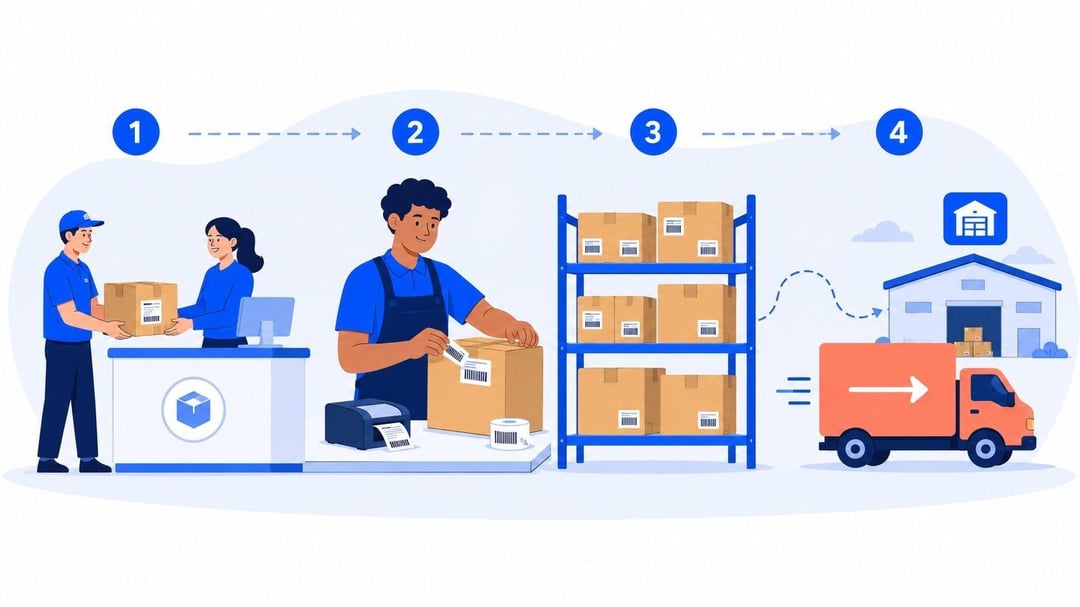
The prep flow that feeds Amazon Germany: receiving, labeling, storage, and forwarding.
Working from a Central European hub keeps inventory close to Germany while supporting the wider DACH region and both FBA and FBM models. The compliance paperwork still belongs to the seller, but a dedicated prep partner removes the operational friction that turns a simple restock into a missed slot.
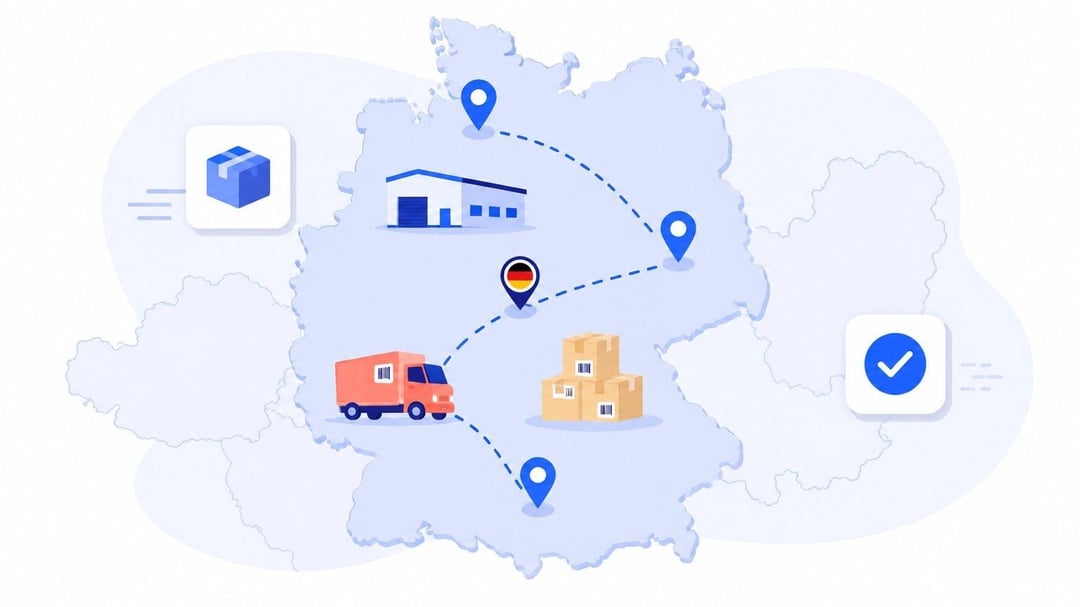
A Central European base keeps inventory close to Amazon’s German fulfillment network.
A pre-launch checklist for Germany
Before your first shipment heads to a German fulfillment center, confirm each of these:
- German VAT registration and an EU EORI number are active.
- LUCID registration and a dual-system contract are in place, with matching reported volumes.
- WEEE and battery registrations are filed if your products need them.
- A GPSR Responsible Person and any required CE marking are sorted.
- Units meet Amazon’s labeling and packaging specs.
- A local prep and forwarding plan is ready to hit Amazon’s inbound windows.
Get those right, and German Amazon prep stops being a source of suspensions and starts working as a competitive edge in one of Europe’s biggest e-commerce markets.
|
Ready to take German Amazon prep off your plate? Talk to the WAPI team about receiving, labeling, storage, and timely forwarding into Amazon’s German fulfillment centers. → Get a quote |
About the author
Jack Taylor is an Ecommerce & Logistics Expert and Senior Ecommerce Consultant at WAPI, where he helps online brands scale across European marketplaces. He works closely with Amazon sellers on FBA prep, cross-border fulfillment, and the operational side of EU market entry.
Disclaimer: This article is for informational purposes only and does not constitute legal, tax, or compliance advice. Sellers should confirm requirements with qualified legal, tax, or EPR specialists before shipping inventory to Germany.
Sources & further reading
- Central Agency Packaging Register (ZSVR) — obligations for online retailers (VerpackG, LUCID): verpackungsregister.org
- Central Agency Packaging Register (ZSVR) — breaches, distribution bans, and fines: verpackungsregister.org
- EAR Foundation — WEEE / ElektroG registration: stiftung-ear.de
- Amazon Seller Central — EPR registration requirement for Germany: sellercentral-europe.amazon.com
- European Commission (Access2Markets) — General Product Safety Regulation, Regulation (EU) 2023/988: trade.ec.europa.eu
- European Commission — Packaging and Packaging Waste Regulation (PPWR), Regulation (EU) 2025/40: environment.ec.europa.eu
